As spring gets underway across Greater South Easton and Norfolk County, homeowners are starting to think about yard work, garden planning, and overall property maintenance. This year especially, it’s worth taking a closer look at your trees. A series of winter storms brought heavy snow followed by strong winds that put tree structure to the test.
Those conditions can leave behind damage that isn’t always obvious right away, from cracked limbs to weakened branch attachments that only become noticeable once trees begin to leaf out. Even trees that look fine can be dealing with underlying stress. An inspection helps you understand what needs to be addressed right away and what steps will support your trees as they recover and grow.
Key Takeaways
- Massachusetts’s heavy winter storms caused hidden structural damage that can become dangerous during summer storms if not identified early in spring.
- A professional spring inspection catches structural weaknesses, internal decay, compromised branch unions, and root damage that aren’t visible from the ground.
- Strategic pruning and structural support in early spring repair winter damage and prepare trees for the upcoming storm season.
- Professional soil testing and targeted pest prevention are especially important for winter-stressed trees that are more vulnerable to nutrient deficiency and infestation.
How Do You Assess Trees for Winter Storm Damage?
Start by walking your property and looking for visible warning signs: cracked or hanging branches, trunks that are leaning more than they used to, exposed roots, and bark splits. Take photos of your trees now so you have a baseline for comparison as they leaf out over the coming weeks. Getting into the habit of a weekly walk-through during the growing season will help you catch changes early.
However, the most serious damage from winter storms often isn’t visible from the ground and requires the trained eyes of an arborist.
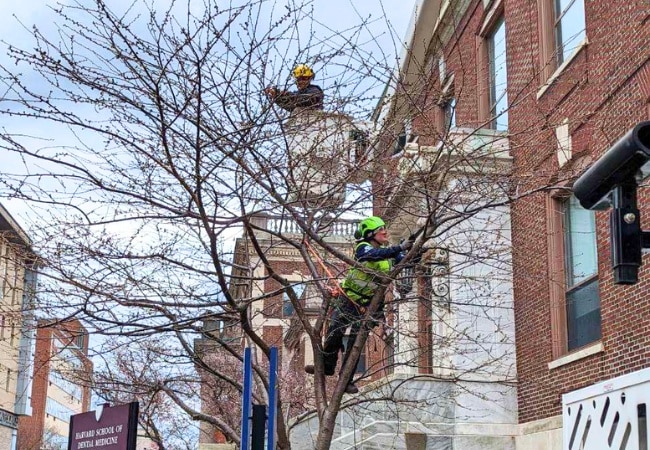
Professional spring pruning removes winter-damaged branches and prepares trees for the upcoming storm season before new growth begins.
What a Certified Arborist Assessment Catches
Certified Arborists identify structural weaknesses that homeowners can’t see, including internal decay, root damage, and compromised branch connections that winter weather may have worsened. Professional tree assessment services use advanced techniques, like sonic tomography, to detect internal decay years before external symptoms appear.
An assessment also identifies which trees are candidates for preservation versus removal, often saving thousands of dollars in emergency removal costs down the road. Early detection allows for tree health management strategies that reduce liability and prevent dangerous situations from developing as we head into summer storm season.
What Tree Care Is Needed After Winter Damage?
The two most common structural responses to winter damage are pruning and, for trees with deeper structural weaknesses, cabling and bracing.
Spring Pruning for Damage Repair
Spring pruning in March and early April removes damaged branches before they can weaken further or break during summer storms. More importantly, it gives arborists a chance to correct structural issues that winter stress may have exposed.
This includes removing overly long limbs, crossing branches, and weak attachments that are more likely to fail under pressure. By addressing these problem areas early, you reduce the risk of future breakage.
Pruning also improves how the tree handles wind. Thinning the canopy reduces the amount of surface area catching wind, while increasing clearance from structures, power lines, and nearby property helps limit potential damage if a branch does fail.
For small dead branches under 1 inch in diameter that you can safely reach from the ground, clean hand pruners are usually enough. However, anything larger should be handled by a professional to ensure proper cuts and avoid creating additional stress on the tree.
Cabling and Bracing for Structurally Weakened Trees
For mature trees showing structural weaknesses that don’t warrant removal, professional cabling and bracing systems prevent branch failure and extend the tree’s lifespan. Structural support services provide a cost-effective alternative to removal for valuable trees with manageable issues.
This work requires professional installation, as improperly installed systems can cause more damage than they prevent.
How Do You Help Storm-Damaged Trees Recover During the Growing Season?
After you have a professional complete pruning and structural support installation for a tree after a storm, the job is only half done. A storm-damaged tree is still stressed, and continued care throughout the spring and summer can help reduce stress and complete its recovery.
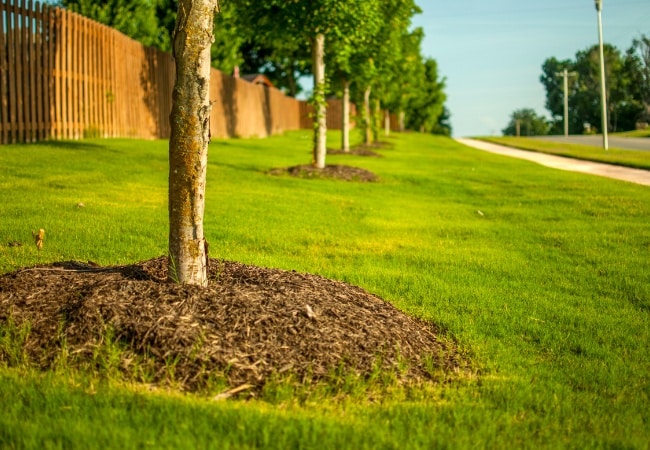
Proper mulching in early spring helps trees retain moisture and adds nutrients to the soil as organic material breaks down throughout the growing season.
Mulching and Spring Cleanup
Refreshing your mulch layer is one of the simplest and most impactful things you can do. Apply a 2-4 inch layer of organic mulch around the tree base, keeping it several inches away from the trunk to prevent moisture buildup and pest problems.
Organic mulches, like shredded bark or wood chips, improve soil structure and retain moisture during Massachusetts’s unpredictable spring weather. Avoid inorganic materials, like rocks or shredded tires, which absorb heat in the summer and cause additional tree stress.
If you installed burlap protection for the winter, remove it as soon as spring starts. Clear storm debris from around the tree base and take the opportunity to clean and sharpen your tree care tools for the season.
Watering Young and Stressed Trees
Newly planted trees (those planted within the last 2-3 years) are especially vulnerable after a tough winter and may need supplemental watering if there’s been little moisture recently. To check whether your trees need water, insert a screwdriver into the soil near the base. If it comes out moist, the soil is well hydrated. If it’s dry, your trees could use a drink.
Use a soaker hose or a large bucket with holes drilled in the bottom to give your trees slow, deep watering. Try to water as much of the area under the drip line (the area under the tree’s canopy) as possible. Getting water down to the deep roots is what matters most; a quick spray from the garden hose won’t cut it.
Soil Testing and Targeted Fertilization
Professional soil testing determines pH levels, nutrient deficiencies, and salt contamination from winter road treatments, all of which can severely stress trees already weakened by winter damage. Tree fertilization programs include deep root fertilization that delivers nutrients directly to active root zones.
Arborists create customized fertilizer blends that target the specific deficiencies in your soil and time applications for optimal absorption. Slow-release formulations prevent nutrient burning and reduce environmental impact.
Ensure you always complete a soil test first, as many established trees don’t need annual fertilization at all, and over-fertilizing can do more harm than good.
PRO TIP: Professional soil testing is always more accurate than at-home kits you buy at hardware stores. For in-depth professional testing, we recommend sending a sample to the University of Massachusetts Soil and Plant Nutrient Testing Laboratory.
Preventing Pests and Diseases
Trees stressed by winter damage are more vulnerable to pests and disease in the months that follow. Addressing those risks early helps prevent small issues from turning into larger, more expensive problems later in the season.
Early spring treatments are designed to stop infestations before they take hold. When timed correctly, they provide protection through the most active growing months — when trees are most susceptible to damage.
This is especially important in areas where trees face ongoing pressure from invasive insects and common diseases. Because many treatments rely on the tree actively moving nutrients and water, timing plays a critical role in how effective they are.
A comprehensive plant health care programs takes this a step further by combining targeted treatments with ongoing monitoring. This approach reduces unnecessary chemical use while supporting overall tree health — an important consideration for families with children and pets using the yard.
Frequently Asked Questions Spring Tree Care in Massachusetts
What’s the most important spring tree care task after a tough winter?
Professional risk assessment provides the greatest safety and property protection. Many tree problems from winter storms aren’t visible to homeowners until they become dangerous or expensive to address.
When should I schedule spring tree services?
March through April is the best window to assess winter damage and start spring tree care. Booking early ensures you’re on the schedule before peak demand and allows treatments to be timed for maximum effectiveness.
Why is my tree not leafing out in spring?
Delayed leaf-out can be a sign of winter damage, stress, or underlying health issues. While some species naturally leaf out later than others, branches that remain bare well into spring may be dead or struggling. A professional inspection can determine whether the tree will recover or if corrective pruning or treatment is needed.
Do trees need fertilizer in the spring?
Not always. Many established trees get the nutrients they need from the surrounding soil. Fertilization is most beneficial for trees showing signs of stress, poor growth, or nutrient deficiencies — which is why soil testing and professional evaluation are important before applying anything.
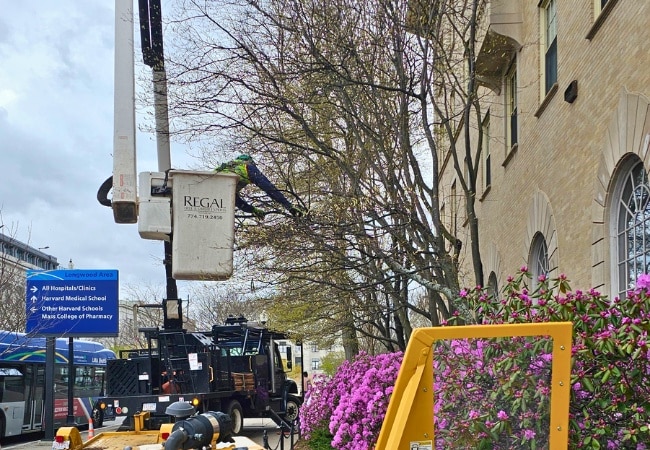
Certified Arborists use specialized equipment and training to safely prune trees at heights that would be dangerous for homeowners to attempt.
Get Your Trees Ready for a Safe, Healthy Growing Season
Professional spring tree care prevents costly emergencies and protects your property investment throughout the growing season. Taking care of your tree work now allows you to help your tree heal from winter damage while preparing it for summer. Early action maximizes treatment effectiveness while ensuring your trees remain healthy and safe.
The team at Regal Tree includes multiple arborists who bring their expertise to every job. We can help get your tree looking its best this spring and prepare it for summer’s heat and storms. Call us today at 774-719-2450 or request a quote online.