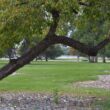
For the second straight year, Massachusetts is below-average when it comes to rainfall, with declining streamflow and groundwater across the state and dry conditions getting worse as we get deeper into the summer. As the ground dried out, mature oaks, maples, and beeches across the Wellesley area started to show the strain. If that sounds like a tree on your property, you may be asking: Can a tree recover after summer stress?
It’s unsettling to see strain on a tree that’s been around your property for years, but things like scorched leaves and curling foliage on their own don’t exactly mean the tree’s dying. The right response is almost never immediate removal. The differentiator of a tree’s odds is how much living tissue is left under the bark, which is something you can check yourself before making a decision you can’t undo.
Key Takeaways
- Most mature trees that keep more than about half of a living canopy can recover from heat and drought stress over one to three growing seasons.
- Premature summer leaf drop is often a survival strategy, not proof that a tree is dying.
- An honest look at how much canopy is still alive—plus a scratch test on the parts you can reach—tells you far more than leaf color alone.
- The most useful things you can do right now are deep, slow watering and proper mulch—not pruning or fertilizing.
- Borers, deep trunk cracks, a new lean, or fungus at the base mean it’s time for a professional assessment.
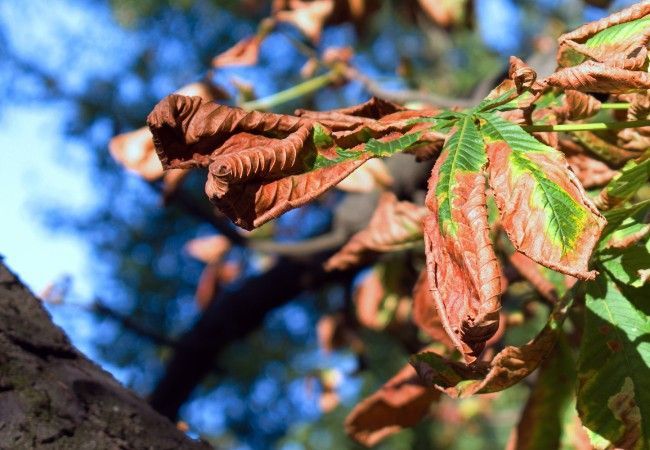
Curling and browning is often a tree limiting its own water loss to protect itself. How the damage is spread across the canopy tells you more than color alone.
Why Are My Tree’s Leaves Turning Brown and Curling in the Heat?
Brown, curling leaves in a heat wave are typically a mature tree limiting its own water loss to protect itself—which is a common and frequently survivable response. How it spreads is the most telling sign: a whole canopy that looks uniformly tired is very different from bare limbs standing among branches that still have leaves. The first indicates a protective response while the second is something to take a closer look at.
Why It’s Showing Up Now
A lot of what you’re seeing goes back further than this summer. Consecutive dry seasons can cause a tree to run its reserves down and show symptoms a year or more after the stress started. Also, heat and drought together are harder on a tree than either is by itself, which is why so many mature trees in the area are struggling at the same time.
Can a Heat- or Drought-Stressed Tree Recover?
Yes, many mature trees recover from heat and drought stress. That said, the odds depend on how much living tissue is left, not how bad the leaves look.
Check the Living Tissue With a Scratch Test
A scratch test is the most reliable thing you can do yourself on a tree that’s safely within reach. Simply scrape a thin sliver of bark with a fingernail or knife from the trunk and any low branches you can reach from the ground and read what’s beneath:
- Green and Moist : That section is alive
- Brown and Dry : That section of the tree is no longer living
- A Combination of Green and Brown : Points to progressive dieback, a reason to have the tree assessed
Be sure to test the tree’s trunk, as it sacrifices individual limbs to save the whole. So, one dead branch doesn’t tell the whole story. You should not climb to the upper canopy of a large tree—it isn’t safe, nor necessary. Assessing the full canopy of a mature tree is a job for an arborist.
Look at How Much of the Tree Is Still Living
For large, mature trees, you won’t be able to perform a scratch test on every branch. Instead, step back and look at how much of the tree is still producing healthy leaves. The amount of living growth that’s left is one of the best indicators of whether the tree is likely to recover.
- Most of the Tree Is Still Alive: Good chance of recovery over the next one to three growing seasons.
- Most of the Tree Has Died: Recovery is unlikely, even with proper care.
If you’re unsure if a tree can be saved, that’s the exact question our professional tree recovery program is built to answer.
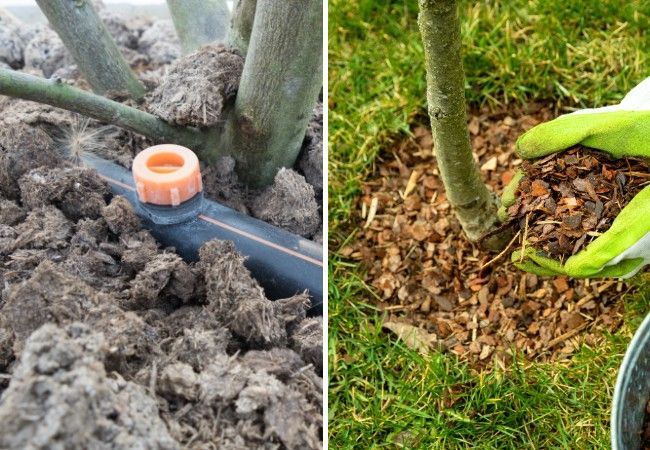
Slow, deep watering at the drip line plus a 2-to-4-inch mulch ring—pulled back from the trunk, never against the bark—is what helps a stressed tree most.
What Can You Do to Help a Stressed Mature Tree?
Once you’ve determined the tree is still alive, your focus shifts from diagnosis to recovery. The goal is to reduce additional stress while giving the tree the water and growing conditions it needs to recover.
Water Only When the Soil Needs It
- Check the soil 6–12 inches below the surface before watering.
- Water deeply at the drip line rather than lightly every day.
- Aim for about an inch of water per week in clay soils and closer to two inches in sandy soils (including rainfall).
- Continue watering into fall during prolonged drought.
Add Mulch to Protect the Root System
- Apply 2–4 inches of arborist wood chips.
- Extend mulch toward the drip line.
- Keep mulch away from the trunk flare.
Avoid Adding More Stress
- Don’t prune living branches.
- Don’t fertilize during or immediately after heat stress.
- Avoid unnecessary soil disturbance around the roots.
When at-home care has met its limits, an arborist can go the extra mile—with soil and root care, and deep root fertilizationwhen a test calls for it. The ongoing monitoring of a plant health care program can track a tree’s recovery across seasons.
How Do You Know When It’s More than Heat Stress?
It’s more than heat stress when signs of pests, structural failure, or total dieback are mixed in with the scorched leaves. Look for things like:
- Pests Moving In : Frass that looks like sawdust at the base, D-shaped exit holes, S-shaped tunnels under the bark, or a sudden increase in woodpecker activity
- Structural Signals : A new or worsening lean with soil heaving or cracking at the base, deep cracks in the trunk, or fungal conks at the root flare
- Dieback of the Whole Tree : The canopy is bare or brown across the entire tree, not just one limb—and the trunk and any reachable branches scratch brown too.
These are important because borers and other secondary pests specifically target stressed trees, since they’re already weakened by drought. Once that damage spreads, the window to save the tree shrinks. That’s the difference getting a professional assessment makes instead of just waiting.
Frequently Asked Questions About Stressed Trees
Can a tree with all its leaves scorched still survive?
Often, yes. Leaf scorch doesn’t kill a tree on its own; what matters is whether the branches and trunk are still alive underneath. A scratch test on the trunk or a branch you can reach, showing green, moist cambium, is a good sign even when the foliage looks rough.
Will a scorched tree grow new leaves this year?
It depends. Some trees push a second, smaller flush of leaves once conditions ease; others wait until spring to save energy. Either way, green and moist tissue under the bark is ultimately what you want.
Should I water my tree every day?
No. One deep, slow soak once a week beats frequent light watering. Short daily sprinklings wet only the top inch of soil and evaporate fast; a long slow soak reaches the deeper roots that matter. Lawn irrigation doesn’t count either—it isn’t reaching a mature tree’s roots. Soak slowly at the drip line, then let the soil dry before watering again.
Can I fertilize once the heat passes?
Not right away, no. A tree still recovering from heat and drought can’t support the new growth fertilizer pushes, so feeding too soon does more harm than good. Wait until the tree is well-watered and clearly rebounding, and let a soil test decide whether it needs anything at all.
Does early summer leaf drop mean my tree is dying?
Usually not. Dropping leaves early is often how a tree cuts its water losses to survive a hot, dry stretch. It’s worth monitoring, but on its own, it isn’t proof of decline.
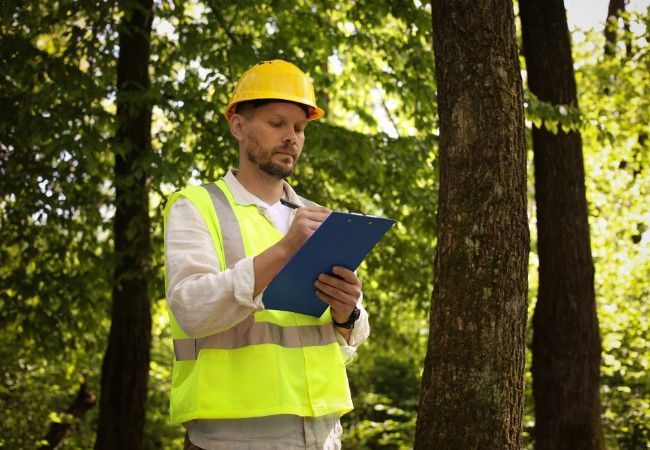
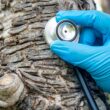
A professional assessment weighs canopy, cambium, root health, and soil together—the difference between preserving a tree and losing it.
Have Your Struggling Tree Assessed by Regal Tree & Shrub Experts
You should never wait when it comes to a declining tree. As seasons pass, drought stress gets worse—and once borers or dieback take over, the chances of recovery drastically decline. The sooner an ISA Certified Arborist takes a look, the more can be done to preserve it. If a mature tree on your property is showing signs of summertime strain, request a quote online or call us at 508-535-5499 today!