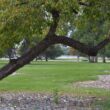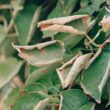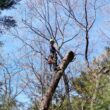
Mature trees are often one of the most valuable parts of a property, but it can be difficult to tell when a tree is experiencing normal aging versus serious decline. Thinning canopies, dead limbs, fungal growth, trunk damage, exposed roots, and sudden leaf loss can all raise the same question: can this tree be saved?
In southeastern Massachusetts, tree preservation has become an increasingly important part of professional arboriculture. Through diagnostics, pruning, soil improvement, pest management, and long-term monitoring, arborists can often slow decline, reduce stress, and extend the life of mature trees that still have good structural potential.
Key Takeaways
- Most trees with less than 25% crown damage and a sound trunk can be preserved, even when a removal quote suggests otherwise.
- Certified Arborists use a three-level diagnostic ladder—visual inspection, written assessment, and advanced tools like sonic tomography—to determine whether internal decay or structural defects make a tree truly unsaveable.
- Preserving a mature shade tree with plant growth regulators, cabling, and ongoing care generally costs a fraction of removal plus replacement when the lost decades of canopy value are factored in.
- Local pressures like emerald ash borer, winter moth defoliation, coastal storms, and recurring Nor’easter damage can heavily influence whether preservation is realistic or whether removal becomes the safer long-term option.
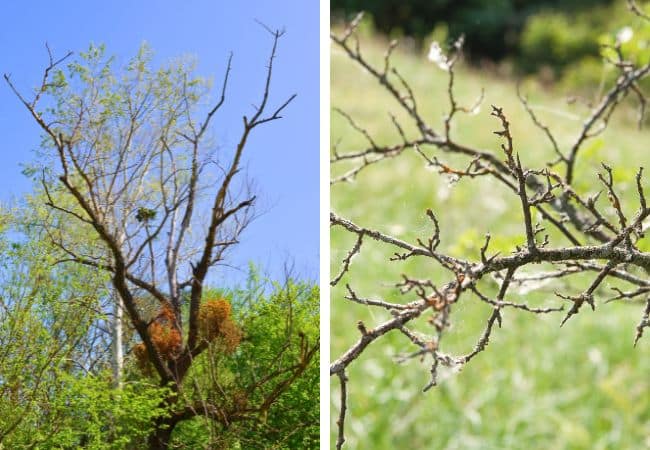
Crown damage above 50% generally tips the math toward removal — but assessing the threshold from the ground isn’t always straightforward.
When Can a Damaged Tree Be Saved?
Most trees can be saved when crown damage is below 25%, the trunk is structurally sound, and internal decay covers less than a third of the cross-section.
Common Tree Damage Thresholds Arborists Look At
Arborists use several structural guidelines when evaluating whether a damaged tree is still a realistic candidate for preservation:
- Crown Damage Under 25%: The tree will likely recover with restorative pruning.
- Crown Damage Over 50%: Removal is typically recommended.
- Internal Decay Affecting 1/3 or More of the Trunk Diameter: The tree may no longer have enough sound wood for safe long-term stability.
- Trunk Wound Under 25% of Circumference: The tree can generally heal on its own; severe trunk damage usually calls for removal.
- A New Lean Greater Than 15 degrees: Strong removal candidate, especially if the root plate is lifting on the opposite side.
Why These Numbers Aren’t the Whole Picture
These thresholds are the baseline, not one-size-fits-all answers. A red oak and a silver maple with identical crown damage can have very different prognoses depending on root health, wood density, and what’s underneath the tree if it falls. Internal decay invisible from the curb is the most common reason a healthy-looking tree isn’t. Before accepting any removal quote, review the warning signs of a hazardous tree.
How Do Arborists Determine If a Tree Can Be Saved?
Certified arborists work through a three-level diagnostic ladder, escalating only as far as the tree’s condition needs.
Level 1 – Visual Inspection
A Level 1 inspection is a drive-by or quick walk-around that catches blatant defects, bundled with a free quote in most cases. It’s plenty when the answer is obvious. For example, a heavily leaning tree over a driveway doesn’t need sound-wave mapping.
Level 2 – Basic Written Assessment
A Level 2 written assessment from a certified arborist is an in-depth evaluation that includes:
- Root flare inspection
- Mallet sounding for hollows
- A written report with photos
This is the right move when a tree is near a high-value target, like a house or play area, and a quick visual inspection isn’t definitive. It’s a paid consultation that abides by the ISA Tree Risk Assessment Qualification framework.
Level 3 – Advanced Diagnostics
A Level 3 assessment uses tools like a sonic tomography assessment, a resistograph, and sometimes air spade root inspection to map what’s happening inside the tree. Sonic tomography uses sound waves to produce a new cross-sectional image of internal decay, cavities, and cracks.
What Local Threats Affect Preservation Potential?
Three regional pressures shift preservation decisions in southeastern Massachusetts more than anything:
- Emerald ash borer
- Winter moth defoliation on oaks
- Cumulative loading from successive winter storms
Emerald Ash Borer Is in Every County We Serve
Emerald ash borer is confirmed in Bristol, Norfolk, Middlesex, Plymouth, and Suffolk counties, and the entire state is under quarantine. Once more than a third of an ash tree is dead from EAB, removal is the right move. Lightly affected ash trees can be treated with systemic insecticides and preserved for years.
The decision turns on inspection timing, as a late-spring assessment catches early canopy thinning and bark splitting before treatment stops working.
Winter Moth Defoliation Stresses Oaks Across Eastern MA
Repeated winter moth defoliation is one of the most underestimated stressors on oaks across eastern Massachusetts. Peer-reviewed dendroecological research found defoliation events were associated with up to a 47% reduction in annual radial growth in affected oaks.
An oak losing radial growth every year is inching toward terminal decline, and PGRs paired with tree health management to reduce liability are designed for this exact scenario.
Repeated Nor’easter Stress Compounds Existing Defects
Cumulative loading from successive winter storms is what turns minor structural defects into major ones. A co-dominant stem with included bark might survive one Nor’easter on borrowed structure; it generally won’t survive a third. Cabling installed before the next storm season is what keeps these trees standing.
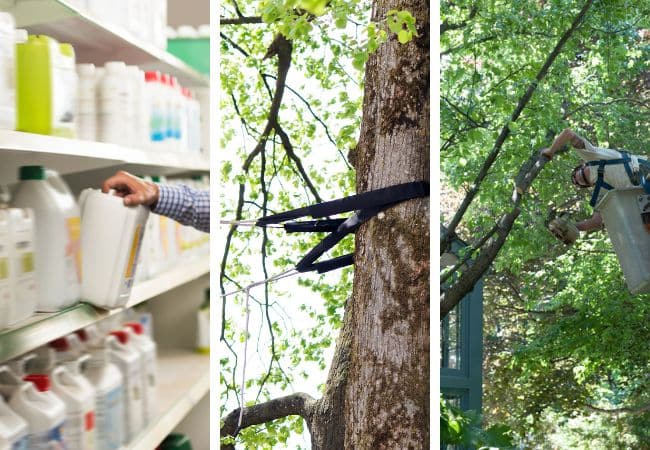
Plant growth regulators, cabling and bracing, and restorative pruning — the three tools that most often change the answer on a tree flagged for removal.
What Tools Can Help Preserve a Mature Tree?
Preserving a mature tree often means managing decline rather than completely reversing it. Arborists use a combination of growth management, structural support, pruning, and soil improvement to reduce stress, improve stability, and extend the safe lifespan of trees that still have good preservation potential.
Plant Growth Regulators Slow Decline
Plant growth regulators redirect a tree’s energy from canopy growth to root development and defense systems. It’s the right intervention when a tree is stressed but not structurally compromised. In southeastern Massachusetts, the optimal window is late spring through early summer, before heat stress ramps up. PGRs are typically paired with deep-root fertilization.
Cabling and Bracing Stabilize Structural Defects
Cabling and bracing reinforce the structural problems that show up in mature shade trees, including:
- Co-dominant stems
- Weak unions
- Included bark
- Split limbs that would otherwise fail in a Nor’easter
High-strength steel cables and threaded bracing rods carry the load instead of the wood. The hardware is mostly invisible from the ground, inspected annually, and usually the difference-maker for older trees labeled as a “structural risk” in a removal quote.
Restorative Pruning Reduces Load
Restorative pruning is targeted reduction, as it removes weight from weak limbs and clears dead wood. It’s not topping, and when done right, it can bring a tree below the threshold where removal would otherwise be warranted. For trees that need a multi-year preservation pathway, our Tree Recovery Program coordinates the pruning, PGR applications, and monitoring into one plan.
When Is Tree Preservation Worth the Investment?
Tree preservation is usually worth the investment when the tree still has enough structural integrity to remain safe long-term and the cost of preserving it is reasonable compared to removing and replacing it.
For many mature trees in southeastern Massachusetts, preservation treatments like restorative pruning, cabling, plant growth regulators, and ongoing plant health care cost less than:
- Removing the tree
- Grinding the stump
- Planting a replacement tree
- Caring for that new tree through establishment
Even more importantly, a newly planted tree cannot quickly replace the shade, privacy, stormwater interception, and property value a mature canopy already provides. A replacement tree may take decades to offer similar benefits.
That said, preservation does not make financial or practical sense for every tree. Severe decay, active root failure, major structural instability, or extensive canopy loss can limit how much long-term value preservation treatments can realistically provide.
The goal is not to avoid removal at all costs. It’s to determine whether the tree still has enough remaining health, structure, and long-term value to justify continued investment.
Frequently Asked Questions About Tree Preservation in Southeastern Massachusetts
Should I always get a second opinion before removing or preserving a tree?
For any mature shade tree, yes. A removal quote based on a quick visual inspection misses internal conditions that diagnostic tools can confirm or rule out, and the cost of a Level 2 written assessment is usually a small fraction of the removal cost.
How do I know if my tree’s damage is over the 50% threshold?
Crown damage above more than half of the canopy, which is measured by missing or dead branches relative to a healthy specimen of the same species, is the standard threshold. If you can’t tell from the ground, that’s when a written assessment is worth it.
How much does a tree risk assessment cost in Massachusetts?
Typically, Level 2 written assessments run a small fraction of what a mature tree removal would cost, and far less than the savings if the tree can be preserved. Level 3 advanced diagnostics, like sonic tomography, are priced higher because of the specialized equipment involved. Pricing varies by tree size and complexity, so the assessment fee is quoted before any work starts.
Can a hollow tree be saved?
It depends on how much of the trunk is hollow. If less than a third of the cross-section is decayed and the remaining wood shell is sound, the tree often has the structural capacity to be preserved with monitoring or cabling.
Can ash trees in Massachusetts still be saved from EAB?
Lightly affected ash trees can be treated and preserved with systemic insecticides, but once more than a third of the canopy is dead, removal is the recommended option. Early-spring assessment is especially important for ash trees.
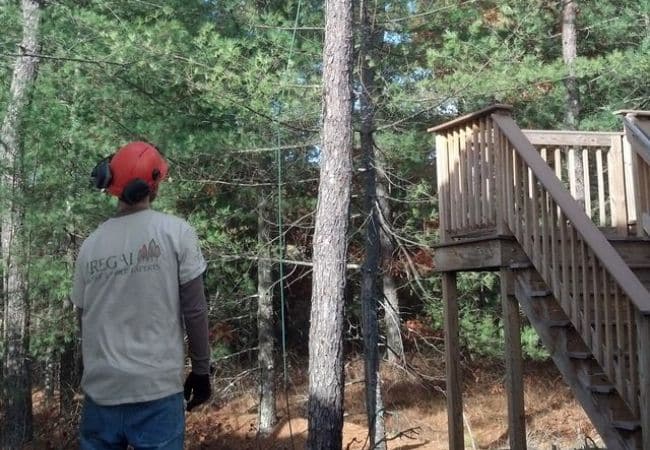
A Level 2 written assessment is the right call when a tree is near a structure or frequently used outdoor space.
Preserve Your Southeastern MA Trees with Regal Tree & Shrub Experts
Not every declining tree needs to be removed, but not every tree can realistically be preserved either. Regal’s approach is to give homeowners a clear understanding of the tree’s condition, preservation potential, and long-term risk so they can make informed decisions about the property.
Regal’s Certified Arborists serve homeowners across Norfolk, Bristol, Middlesex, Plymouth, and Suffolk counties in Massachusetts and Providence County in Rhode Island with same-week consultation scheduling most of the year. If you’re holding a removal quote on a mature tree right now, request an arborist consultation from the tree and shrub experts at Regal by calling 774-719-2450.