Tree pests and diseases have become a growing issue in Norfolk County, especially over the past few years. Emerald ash borer arrived in 2017, followed by beech leaf disease in 2020, which has since spread across Massachusetts. More recently, spotted lanternfly has been popping up in more and more towns, adding to the list of concerns for local homeowners.
With dozens of tree pathogens and numerous invasive insects now active in Massachusetts, the list of possible problems can feel never-ending — and many of them can impact your trees before you even realize there’s an issue.
Key Takeaways
- Norfolk and Bristol counties face active threats from emerald ash borer (EAB), beech leaf disease, spongy moth, and spotted lanternfly, many of which are actively spreading through southeastern Massachusetts.
- The symptoms you notice — and when you notice them — are your best clues to identifying what’s affecting your trees.
- Some tree problems are cosmetic nuisances that resolve on their own, while others, like EAB and beech leaf disease, can kill trees in just a few years when left untreated.
- Effective pest and disease management depends on professional diagnosis because timing, product selection, and application methods all determine the effectiveness of treatment.
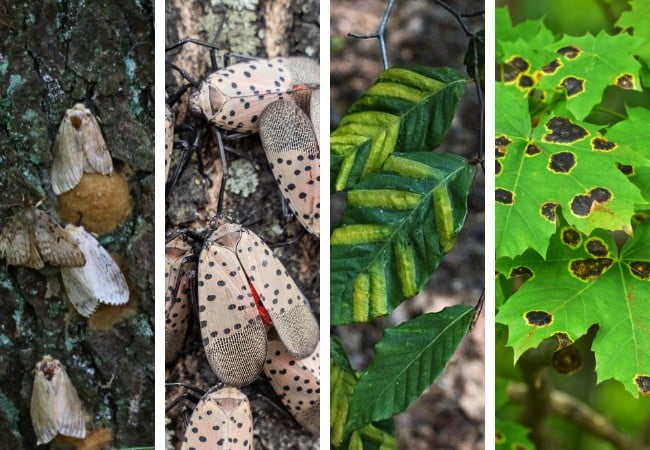
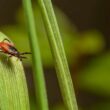
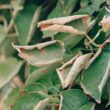
Four of the most common pest and disease threats facing trees in Norfolk and Bristol counties: spongy moth, spotted lanternfly, beech leaf disease, and anthracnose.
What Tree Pests and Diseases Should Norfolk and Bristol County Homeowners Watch For?
Norfolk and Bristol County homeowners should watch for emerald ash borer, spongy moth, beech leaf disease, spotted lanternfly, and several fungal diseases. Many of these invasive and tree-threatening insects and diseases overlap in Norfolk and Bristol counties, but their activity windows are not aligned.
Some pests do their damage in spring before you’ve even finished your first yard cleanup. Others don’t peak until the middle of summer. Seasonal organization helps you connect what you’re seeing to the most likely cause, and whether it needs attention now or later.
What Tree Problems Appear in Spring?
Spring is when most tree problems first become visible, as new growth reveals damage from the wintertime or emerges alongside rising temperatures and wet weather.
Fungal Diseases That Thrive in Cool, Wet Weather
Anthracnose and apple scab are the two fungal diseases you are most likely to see in spring across Norfolk and Bristol counties. Anthracnose appears as dark, irregular spots on leaves, especially on lower branches of maples or dogwoods, during cool, rainy stretches from April to May. Typically, it stops spreading once the summer heat sets in.
Apple scab produces olive-green or brown blotches on the leaves and fruit of apple and crabapple trees and overwinters in fallen leaves, reinfecting trees every spring if debris isn’t cleaned up. Each is among the four most common tree diseases in Massachusetts.
Early Insect Activity
Winter moth larvae are some of the early feeders in the springtime. They bore into buds and emerging leaves on oaks, maples, and fruit trees, and can strip a canopy surprisingly fast. If you’ve noticed leaves that appear to vanish almost as soon as they unfurl, winter moth is likely the reason behind it.
Spring is also when beech leaf disease symptoms become visible on new growth. Look for dark green banding between a leaf’s veins — it’s most noticeable from the ground on a sunny day. As the disease grows, leaves curl and buds may fail to open at all. If you have beech trees on your property, our frequently asked questions about beech leaf disease has good insight on what to watch for and do.
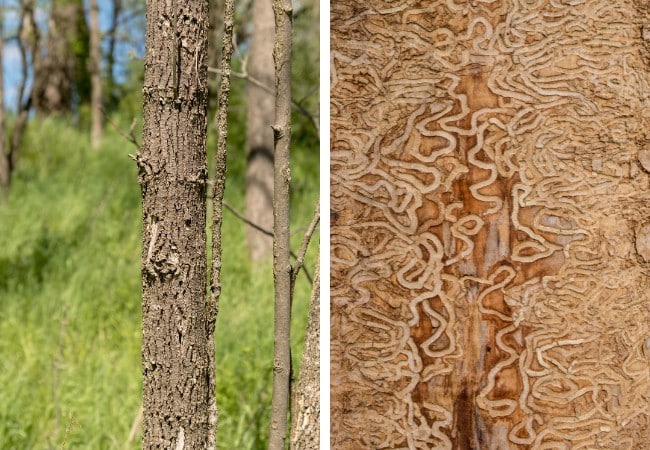
The two telltale signs of emerald ash borer damage: woodpecker “blonding” on the outer bark (left) and the winding S-shaped galleries carved by larvae feeding under the bark (right).
What Pests and Diseases Are Active in Summer?
Summer carries the most intense pest activity, as warmer temperatures speed up insect lifecycles and drought stress hinders trees’ natural defenses.
Here are some of the most common issues to watch for:
- Emerald Ash Borer: Adults emerge between May and June, leaving behind D-shaped exit holes in ash bark. You may also notice thinning at the top of the canopy or increased woodpecker activity (“blonding”) as birds go after larvae.
- Spongy Moth: Caterpillars feed heavily on oaks, birches, and other species, often leading to noticeable leaf loss and canopy thinning.
- Spotted Lanternfly: Nymphs, now present in Norfolk and Middlesex counties, produce a sticky honeydew that coats trunks and surfaces below, often leading to black sooty mold.
- Beech Leaf Disease: Nematodes are active through the summer months, though visible damage typically doesn’t appear until the following spring.
How Does Heat and Drought Stress Make Trees More Vulnerable to Pests and Disease?
Summer heat and drought don’t just stress trees on their own; they compromise a tree’s ability to fight off pests and diseases. A tree that is already struggling with limited water can’t compartmentalize wounds or mount a strong defense against infection. This is why summer tree care tips to keep your trees thriving are noteworthy before the heat gets going.
Which Tree Problems Are Urgent and Which Can You Monitor?
While not every tree problem calls for immediate action, some do, and knowing the difference can save both your trees and budget.
Call an arborist as soon as possible if you notice:
- D-shaped exit holes, crown thinning, or woodpecker blonding on ash trees — EAB can kill ash trees in just a few years
- Dark banding on beech leaves with progressive leaf curl or bud failure — beech leaf disease can be deadly within five years without intervention
- Sudden branch failure, major cracks in the structure, or rapid crown decline
- Widespread dieback across numerous branches or the entire canopy
Monitor and reassess when you see:
- Minor anthracnose spotting that clears up when the weather gets warmer
- Light spongy moth defoliation on an otherwise healthy, vigorous tree — most healthy trees recover from a single season of moderate feeding
- Cosmetic leaf spots or discoloration with no structural impact
The line between “act” and “monitor” depends on the overall health of your tree, how close it is to structures, and the exact pest or disease involved. When the answer isn’t clear, a professional evaluation takes away needless guesswork.
How to Prevent Tree Pests and Diseases Before Spring
Fall and winter are your best opportunity to reduce pest and disease pressure before the next growing season begins.
Many insects and pathogens survive the winter in leaf litter, bark, or soil around the tree. Removing infected leaves and debris helps eliminate those overwintering sites, reducing the chance of reinfection in spring. Fall is also an ideal time for fertilization, which supports root development and helps trees enter dormancy stronger and better prepared to handle stress.
Taking time to assess tree health now also makes a difference. Trees that go into winter stressed or weakened are more vulnerable to pest and disease issues once temperatures rise, so catching problems early can prevent them from getting worse.
Key prevention steps heading into winter:
- Remove infected leaves and debris to limit overwintering pests and fungi
- Inspect trees for stress or decline before dormancy
- Address storm damage like cracked limbs or split trunks
- Apply fall fertilization if needed to support root health and resilience
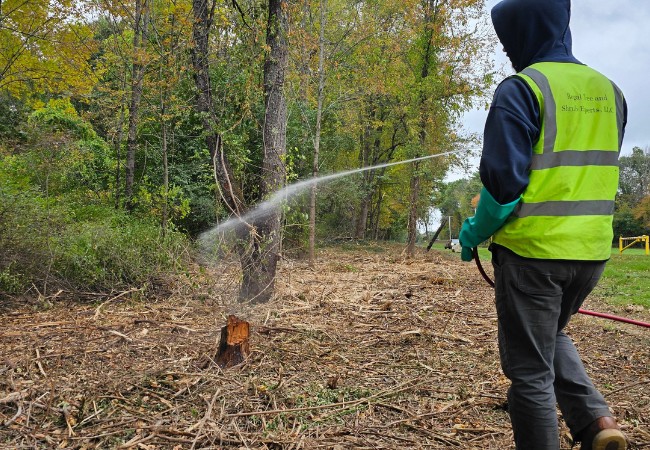
A Regal Tree plant health care technician applying a targeted treatment — timing, product selection, and professional application all factor into whether pest and disease management actually works.
Frequently Asked Questions About Tree Pest and Disease Management
What are the most common tree pests in Norfolk and Bristol County?
Emerald ash borer, spongy moth, winter moth, spotted lanternfly, and hemlock woolly adelgid are some of the most common pest threats in Norfolk and Bristol counties. Each targets different tree species and is active at different times of year, which is why seasonal monitoring is crucial.
What does beech leaf disease look like?
The most visible symptom is dark green banding between the veins of beech leaves, best seen from the ground while the sun is out. As the disease progresses, leaves curl, shrink, and buds may fail to open fully in the following seasons.
Is emerald ash borer still spreading in Massachusetts?
Yes. EAB has been confirmed in over 280 communities across 12 Massachusetts counties. Norfolk County has been affected since 2017, and the entire state stays under federal quarantine for ash wood movement.
Can I treat tree diseases myself?
For most severe pests and diseases, professional treatment is required. Massachusetts requires a license to apply pesticides on another person’s property, and the timing, dosage, and product selection that determine whether treatment actually works needs professional knowledge.
When is the best time to treat trees for pests in Norfolk County?
It depends on the pest. Preventive treatments are most effective in early spring before insect activity starts. EAB treatments work best from May through June, and fungal disease prevention needs to start before symptoms appear. A Certified Arborist can recommend the right timing for your specific circumstances.
Do ticks and mosquitoes have anything to do with tree health?
Yes, indirectly. Overgrown, shaded, or poorly maintained landscapes create optimal habitats for ticks and mosquitoes. Keeping your trees and shrubs properly managed decreases harborage areas for these pests. For continuous treatment, specific mosquito and tick services could be needed.
What should I do if I think my tree is dying?
Don’t assume your only option is removal. Many trees that seem to be in serious decline can be restored with proper diagnosis and a structured plan for treatment. A certified arborist can determine whether your tree is a good candidate for recovery before any decisions are made.
Contact Regal Tree for Your Pest and Disease Management Needs
Across Norfolk and Bristol counties, trees are faced with real threats from invasive pests and diseases. Proactive pest and disease management makes a major difference in outcomes, though. Knowing what to keep an eye out for in spring, summer, and fall gives you a good head start over homeowners who wait until there is obvious damage.
If you’ve noticed something troubling on your trees, our Certified Arborists can diagnose the problem and recommend the right course of action. Give us a call at 774-719-2450 or request an estimate online to get started.