When you discover dark banding on your beech leaves in Wellesley’s Historic Cottage Street district or notice declining oaks around Kingsbury Pond in Norfolk, the critical question isn’t what disease you’re dealing with. It’s determining whether your trees need prevention or treatment –and making that decision before it’s too late.
Tree disease management hinges on accurate assessment and timing. Understanding when to shift from prevention to treatment can mean the difference between saving a valuable mature specimen and facing costly removal. The key lies in professional evaluation that reveals not just what you can see, but what’s happening inside your trees.
Key Takeaways
- Professional assessment determines whether prevention or treatment offers the best path forward for your specific trees and disease pressure.
- Sonic tomography technology detects internal disease progression before external symptoms appear, changing prevention vs. treatment decisions.
- Early intervention through proper assessment typically costs significantly less than emergency treatment and removal.
- Norfolk County faces specific disease pressures, including beech leaf disease, Dutch elm disease, and anthracnose, that require different management approaches.
- Mature specimens in established neighborhoods require different evaluation strategies than younger trees in recently developed areas.
- The timing of professional assessment affects treatment success, with late summer/early fall providing optimal disease visibility.

Professional tree health management requires specialized equipment and expertise for effective treatment delivery.
Prevention or Treatment? How to Decide What Your Trees Need
The most critical factor in tree disease management isn’t which products to use; it’s accurately determining where your trees sit on the health spectrum. This decision point determines everything from cost to treatment success to long-term tree survival.
Prevention makes sense when trees show no symptoms but face known disease pressure in your area. For example, according to the Massachusetts DCR Forest Health Program, beech leaf disease has been confirmed in 83 Massachusetts communities since 2020. Healthy beeches in Norfolk County benefit from preventive treatments before symptoms appear.
Treatment becomes necessary when symptoms are present, but the tree retains significant structural integrity. However, the window for effective treatment varies dramatically by disease type and can be surprisingly narrow.
PRO TIP: Wellesley’s municipal tree management program demonstrates the value of proactive assessment – their systematic evaluation cycle for over 3,000 town-owned trees prevents most disease issues before treatment becomes necessary.
How to Tell When Prevention Isn’t Enough
Several indicators signal that your trees have moved beyond the prevention stage and need immediate treatment intervention:
- Visible Symptoms Have Appeared: Any leaf discoloration, wilting, canker formation, or unusual growth patterns indicate the prevention window has closed.
- Neighboring Trees Show Disease Signs: Disease pressure in your immediate area often means asymptomatic trees already have early-stage infections.
- Stress Factors Are Present: Drought, construction damage, or soil compaction create conditions where prevention alone won’t protect vulnerable trees.
- High-Value Specimens at Risk: Mature trees that would cost thousands to replace warrant more aggressive intervention even at early symptom stages.
The challenge lies in detecting these transition points early enough for treatment to succeed. This is where professional assessment becomes invaluable.
| Disease Stage | Best Strategy | Typical Cost |
|---|---|---|
| No symptoms, low risk area | Monitor and maintain | Lowest |
| No symptoms, high risk area | Preventive treatment | Lower |
| Early symptoms present | Immediate treatment | Higher |
| Advanced symptoms | Recovery program | Highest |
How Professional Assessment Improves Tree Disease Management
Professional tree health evaluation goes far beyond what property owners can see from the ground. ISA Certified Arborists combine visual assessment with diagnostic tools to reveal the complete health picture of your trees.
This comprehensive approach prevents two costly mistakes: applying expensive treatments to trees that don’t need them and missing early disease stages when treatment would be most effective.

Dutch elm disease is a major threat to our forests and the remaining elm trees.
What Arborists Look for During Tree Health Evaluations
Professional assessment examines multiple factors that determine disease management strategy:
- Crown Condition Analysis: Arborists evaluate leaf density, color patterns, branch dieback, and growth rates to identify stress and disease indicators.
- Root Zone Assessment: Soil compaction, drainage issues, and root damage often contribute to disease susceptibility and treatment success.
- Structural Integrity Evaluation: Internal decay and structural compromise affect whether aggressive treatment is worth the investment.
- Species-Specific Risk Factors: Different tree species have unique disease vulnerabilities that influence management approaches.
- Environmental Stress Evaluation: Construction damage, salt exposure, and drought stress create conditions that change disease management strategies.
“We’ve found that 60% of trees property owners think need treatment actually benefit more from stress reduction and preventive care. Accurate assessment saves both money and trees.” – Kevin Johnston, Owner of Regal Tree & Shrub Experts
How Sonic Tomography Detects Disease Before Symptoms Appear
Sonic tomography technology fundamentally changes tree disease management by detecting internal decay and structural compromise before external symptoms develop. For century-old specimens in areas like Cliff Estates and Wellesley, this early detection capability can mean the difference between preventive intervention and emergency removal.
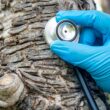
The technology works by measuring sound wave velocity through wood. Healthy wood transmits sound quickly, while decayed or compromised wood slows transmission significantly. This creates detailed internal “maps” that reveal disease progression and structural integrity.
This diagnostic capability particularly benefits properties with high-value mature specimens where removal and replacement costs can add up to thousands of dollars per tree. Early detection allows for targeted treatment before the disease becomes too advanced to manage effectively.

Regal Tree’s specialized plant health care equipment enables comprehensive tree disease prevention and treatment programs throughout Norfolk County.
Common Tree Diseases in Norfolk County and How to Manage Them
Norfolk County faces specific disease pressures that require targeted management approaches. Understanding these diseases helps property owners make informed decisions about assessment timing and treatment strategies.
- Beech Leaf Disease: Treatment must begin within 2-3 years of symptom onset for best results. The US Forest Service reports that young trees can die within 2 years, while mature specimens typically survive 4-6 years without intervention.
- Dutch Elm Disease: Prevention is the only viable strategy. UMass Extension research shows that preventive fungicide injections can protect American elms effectively, while treatment after infection has limited success.
- Anthracnose: Offers the most flexible management timeline. Cool, wet spring weather triggers outbreaks, but this disease rarely kills established trees and often resolves naturally by mid-summer.
PRO TIP: For comprehensive information on identifying these diseases, explore our guide to common tree diseases affecting Massachusetts properties.
Frequently Asked Questions About Tree Disease Management
What factors determine if a tree disease can be successfully treated?
Success depends on factors such as:
- Disease type
- Tree species
- Extent of infection
- Timing of intervention
While beech leaf disease needs treatment within 2-3 years of symptoms, some anthracnose infections can be addressed even after widespread symptoms appear.
When should I consider tree recovery instead of removal for diseased trees?
Recovery programs work best for mature, high-value specimens with moderate disease progression, particularly in established neighborhoods like Medfield where mature trees contribute significantly to property values. These programs integrate multiple treatment approaches and typically extend tree life by 5-15 years depending on species and condition.
How often should trees be professionally assessed for disease issues?
For most Norfolk County properties, we recommend professional inspections every 2-3 years for healthy trees. Properties with known disease pressure or specimen trees over 75 years old benefit from annual assessments. The best timing is late summer/early fall when disease symptoms are typically most visible and before winter stress begins.
Protect Your Norfolk County Trees with Regal Tree’s Expert Care
Your mature trees are irreplaceable assets that took decades to grow. But they can be lost in just a few years without proper disease management. Our ISA Certified Arborists combine advanced diagnostic tools, like sonic tomography, with proven treatment protocols to give your trees the best chance of survival.
Don’t wait for symptoms to become severe. Schedule your professional tree health assessment today and discover whether prevention, treatment, or recovery offers the best path forward for your specific trees and neighborhood conditions. Call us today at 774-719-2450 or request your quote online now.