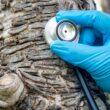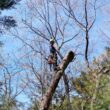
Massachusetts’ September 2026 drought update kept the northeast and southeast regions in mild drought, and Quabbin Reservoir levels remain below normal. Such dry conditions can show up in trees as early color, thinning canopies, and leaves dropping before they normally would. That makes fall tree care a priority for any mature oak, maple, or beech that doesn’t look quite right.
Drought stress can linger even after the rain returns, leaving a tree more open to insects and disease a year or more later, while decay inside the trunk can go unnoticed. Watering and mulching both need to happen before the ground freezes, so there’s a limited window to find out what’s affecting your tree.
Key Takeaways
- Change that is even across the whole canopy and fits the species’ usual timing is often normal, while patchy, one-sided, or new-this-year change deserves a closer look.
- Red oak, white oak, and beech normally hold their green longer than red maple or white ash, so early color or leaf drop tells you more in those species.
- Remove only dead or unsafe limbs now; water and mulch before the ground freezes; fertilize only if the tree needs it; and save major pruning for winter.
- A sudden lean, heaved or cracked soil, a deep trunk crack, or a split between large stems should not wait for spring.
- Whether you can save a large tree depends partly on hidden decay, which sonic tomography can measure without cutting into the trunk.
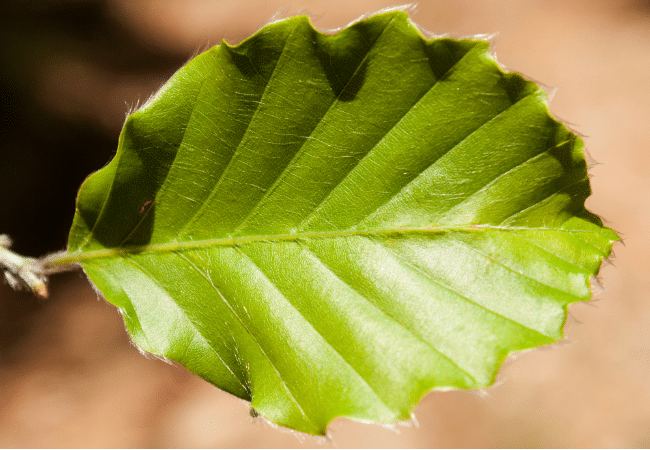
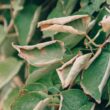
Beech leaf disease is easiest to spot from below, with light coming through the leaves.
How Can You Tell If Early Fall Color Is Normal or a Sign of Stress?
Usually, early color is normal when the entire canopy changes evenly and the species turns early. Patchy, one-sided, or color that’s new this year is more concerning. There are a few ways to quickly check and sort out which you’re dealing with, and an arborist’s tree health evaluation can confirm it. Step back from the tree and compare it in these ways:
- Across the Canopy: A single affected section, whether one side or the top, is more worrying than an even fade.
- Against Your Neighbors: A tree out of step with others of its species points to something specific to that tree, such as its roots or soil.
- Against Previous Years: Photos from earlier falls, if you have them, show whether this year is really different.
Why Species Is So Important
Red maple and white ash color early, while red oak, white oak, and beech stay green longer, so early color or drop in an oak or beech can be more alarming. In any species, early color needs a closer look when it comes with any of these:
- Early Leaf Drop: Leaves falling well before their neighbors’ is a stronger signal than color alone.
- Dead Limbs or a Thin Canopy: Both suggest the tree has struggled for longer than one season.
- Recent Nearby Construction: Digging and compaction around the roots can trigger early color.
- Leftover Storm Damage: Cracked or hanging limbs give the tree more to deal with.
What Could Be Causing a Tree to Look Stressed in the Fall?
There are three things that should be ruled out first, since stress can have more than one cause. Last fall, in Massachusetts, leaf spot diseases added to the stress and helped drive premature browning and leaf drop. Any of these can also cause early color or leaf drop on its own:
- Lingering Drought Stress: Leaf scorch, rolled leaves, twig dieback, early drop, and early color are all drought symptoms. Drought can also predispose a tree to fungal cankers. Check whether the tree is still alive before assuming the worst.
- Beech Leaf Disease: This disease starts with dark green bands between the leaf veins and is easiest to spot from below, with light coming through the canopy. Later signs include cupped, curled, or leathery leaves; early drop; dead buds; and a thinning canopy. The nematodes behind it move into buds from mid-summer into October, so fall is a good time to look.
- Root or Planting Problems: The root flare, where the trunk widens at the base, should sit at or above the soil line. A tree planted too deep can decline slowly for years.
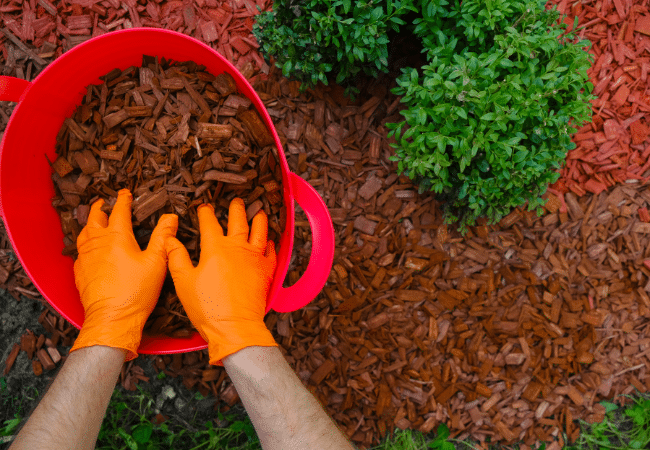
Mulch and water both need to go down before the ground freezes, so fall tree care has a limited window.
What Should You Do for a Stressed Tree Before Winter?
Only remove dead or unsafe limbs right now, water and mulch before the ground freezes, fertilize only if the tree needs it, and leave major pruning for winter. Each task has its own window between now and early spring:
- Walk the Tree (Now): Check the root flare and photograph the canopy from the same spot each October for year-over-year comparison.
- Look for Pests (Now): Sawdust-like frass at the base, D-shaped exit holes, and increased woodpecker activity can point to wood-boring insects, such as emerald ash borer on ash. Banding on beech leaves is a sign of beech leaf disease.
- Prune Lightly (Now): Take out dead or weak branches only. Leave large limbs to a professional.
- Water (Before the Ground Freezes): If it is dry, water slowly, like a steady rain. Use a soil probe or moisture meter to confirm the water reaches 12 to 18 inches down.
- Mulch (Before the Ground Freezes): Spread 2 to 4 inches of arborist wood chips, keeping them at least 3 inches from the trunk.
- Fertilize If Needed (Before Winter): Ask an arborist whether the tree needs it and which product fits. Skip fertilizer on a tree under drought stress unless it can be watered, and leave the application to a professional.
- Check Weak Unions (Before Winter Storms): Have co-dominant stems assessed for cabling and bracing. Installed hardware needs an annual inspection.
- Prune (Winter to Early Spring): Schedule major pruning and shaping then.
What Structural Warning Signs Can’t Wait Until Spring?
Any sign that a tree’s structure is giving way cannot wait until spring. A tree only counts as hazardous when it has something it can hit, which arborists call a target. Winter wind and snow also add strain to a tree that’s already compromised.
Structural Red Flags
Some signs are easy to spot from the yard while others need a trained eye. Deciding whether a tree is actually a hazard is a job for an ISA Certified Arborist, so call one soon if you notice any of these:
- Sudden Lean With Heaved Soil: Together, they suggest the roots are letting go.
- Deep Trunk Crack or a Split Between Large Stems: Either one compromises the structure holding the canopy up.
- V-Shaped Co-Dominant Trunk: Two similar-sized stems joined in a narrow V tend to split under load.
- Mushrooms at the Base: Fungal growth there points to stress and possible decay.
- Dead Limbs Over a Target: A dead limb becomes a hazard when it hangs over a roof, driveway, or play area.
What Dictates a Tree’s Survival
Treatments like pruning, cabling and bracing, and insect and disease control can save a tree that might otherwise come down. The odds depend on:
- Crown Damage: The more of the living crown that is affected, the lower the odds of recovery.
- Trunk Soundness: A sound trunk with strong branch attachments gives the tree far better odds.
- Hidden Decay: Decay inside the trunk can leave too little sound wood.
Sonic Tomography for Hidden Decay
As trees age, they can carry large volumes of internal rot, which is why a mature tree that appears to be sound from the outside may not be. Sonic tomography measures what a visual check can’t:
- How it Works: Sensors placed around the trunk record how long sound takes to travel through the wood. Sound moves more slowly through decay, and software turns those readings into a picture of the interior.
- What You Get: A non-invasive test that can be repeated to track change over time.
- What It Means: Decay alone does not make a tree hazardous. The concern is decay combined with weak branch unions or split trunks.
Frequently Asked Questions About Stressed Trees
Can a beech tree with beech leaf disease be saved?
There is no cure, but treatments labeled for use in Massachusetts can slow the disease. Untreated trees in southern New England often decline quickly. Have a suspect tree confirmed by a certified arborist instead of waiting to see how it looks next year.
How can I tell beech leaf disease from harmless leaf problems?
Beech leaf curl aphid, mite-caused patches, and powdery mildew can look similar but are usually not serious. An arborist can usually tell them apart on site, and a leaf sample sent to UMass’ plant diagnostics lab can settle a close call.
Does one dead branch mean the whole tree is dying?
No. Stressed trees often sacrifice a few branches to keep the trunk alive, and a scratch test tells you more than the leaves do. Scrape a thin sliver of bark from a branch you can reach from the ground. Green, moist tissue means that section is alive. Brown, dry tissue means it is not.
Should I rake up the leaves from a tree that looked stressed?
If leaf disease was part of the problem, yes. Removing fallen leaves from around the base reduces the pathogen that overwinters there and can infect new leaves in spring. Composting them is less clear-cut because home composting may not kill the pathogen. Bagging the leaves is safer when you’re unsure.
Is an arborist consultation the same as a free quote?
No. Regal gives free estimates for general tree work. An arborist consultation is an in-depth, paid evaluation.
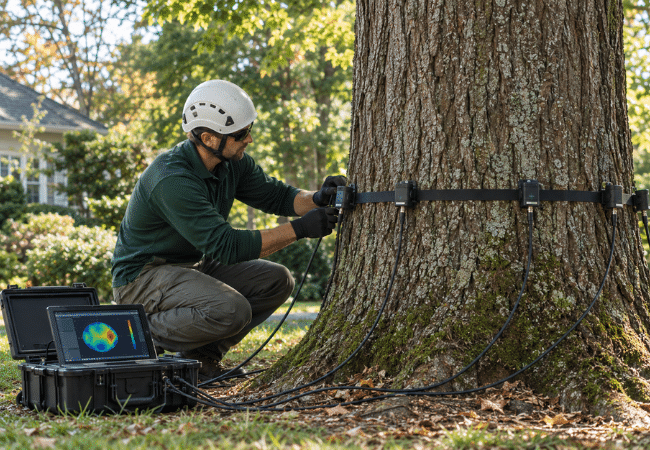
Sonic tomography shows what is going on inside a mature trunk without cutting into it.
Have a Regal Arborist Look at Your Stressed Tree This Fall
Regal’s ISA Certified Arborists can diagnose what’s stressing your tree and give you objective advice on how to handle it. If the tree’s close to your house or a frequently used part of the yard, request a quote online so that Regal can look it over.