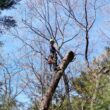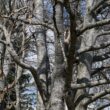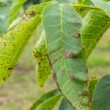
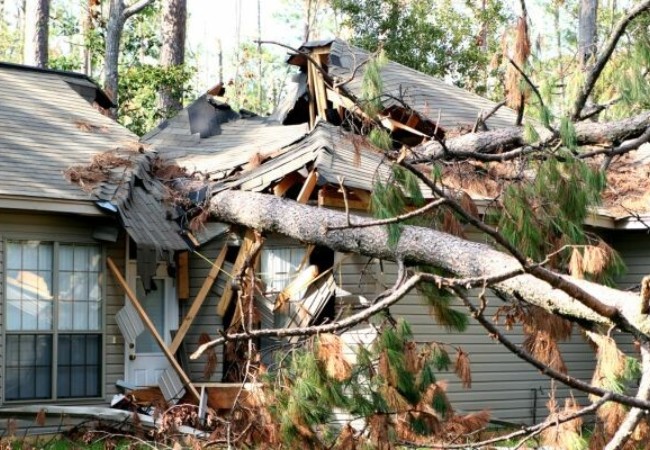
Recent weather brought severe storms to Southern New England that caused havoc across Massachusetts and Rhode Island. In Cranston alone, over 70 trees were damaged, and nearly 95,000 customers lost power throughout the region. For many property owners, the aftermath raised an important question: should a storm-damaged tree be removed, or can it be safely recovered with professional care?
With winter offering optimal timing for both assessment and action, understanding when tree removal versus tree recovery in Massachusetts makes sense can save you thousands while protecting your property investment.
Key Takeaways
- Professional assessment determines if your storm-damaged tree can recover; trees with 50% or more crown and intact leaders typically survive with treatment, while those with major trunk damage usually require removal.
- Recovery treatment costs significantly less than complete removal and replacement while preserving the property value that mature trees provide for decades.
- Winter offers the best timing for both assessment and action due to clear structural visibility, reduced tree stress during treatment, and scheduling advantages during the slow season.
- Massachusetts law protects property owners from healthy tree liability, but you remain responsible for removing visibly hazardous trees that could cause foreseeable damage.
- Professional recovery involves structural pruning, cabling when needed, and plant health care programs that show significant improvement by the second growing season.
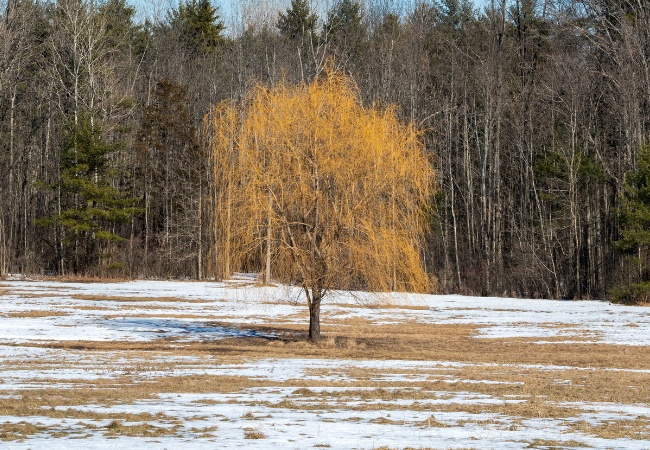
Winter’s bare branches reveal the true structural condition of trees, making it the ideal season for professional assessment.
How Can You Tell If Your Damaged Tree Can Be Saved?
The difference between a recoverable tree and one requiring removal often comes down to specific structural and biological factors that only trained arborists can properly assess. Most homeowners underestimate their trees’ recovery potential, especially when damage appears extensive from ground level.
Some of the factors we look at during an arborist assessment to determine the survivability prospects of your tree include:
- Crown Damage: Trees retaining 50% or more of their crown with an intact central leader generally show excellent recovery prospects with proper treatment, while trees with less than 50% crown remaining face significantly reduced survival odds.
- Trunk Integrity: Splits, cavities, or damage exceeding 25% of the trunk’s circumference typically indicate the need for removal rather than recovery. Structural compromise at this level cannot be adequately addressed through treatment.
- Root System Evaluation: Raised soil around the tree base, exposed major roots, or recent construction within the drip line can compromise stability regardless of crown condition, requiring professional assessment to determine if recovery remains viable.
- Species Considerations: Maples, oaks, and elms demonstrate remarkable recovery abilities after major damage. Conversely, birches and pines struggle more with trauma and may require different treatment approaches or removal decisions.
We can’t save every tree, unfortunately. If a tree appears to be hazardous, we will suggest immediate removal to preserve the safety of your family and property.
PRO TIP: One of the best ways to avoid having to remove a tree after it sustains storm damage is to protect it from harm in the first place. We’ve covered ways to prevent storm damage in some of our previous articles:
Why Is Winter the Best Time to Make Tree Recovery or Removal Decisions?
Winter transforms tree assessment and treatment in ways that benefit both the trees and your budget. Without leaves obscuring the canopy, structure and defects are easier to evaluate, and major corrective work can be done with less stress on the tree than during the growing season.
Clear Visibility and Optimal Assessment Conditions
Professional winter tree assessments and tree work possess several advantages over inspecting trees during the growing season, such as:
- Better visibility of the branch structure without leaves in the way
- Lower risk of landscape damage thanks to frozen ground
- More prominent decay indicators and structural weaknesses
“Winter assessments reveal so much more than homeowners realize. Without leaves blocking our view, we can spot early signs of disease, structural weaknesses, and recovery potential that would be completely hidden during the growing season. I’ve seen trees that looked hopeless in summer turn out to have excellent recovery prospects once we could properly evaluate them in winter.” – Adam Winsor, Plant Health Care Manager at Regal Tree & Shrub Experts
Scheduling Flexibility During the Slow Season
Despite the fact that winter is the best time to do most tree work, it is actually a slow time for most tree services. This provides you with a unique advantage when it comes to scheduling your tree work.
With fewer jobs on the calendar, tree services have more flexibility on when they can schedule your tree work. You won’t have to wait around for weeks to have an arborist inspect your trees, but you can instead get help as soon as you need it.
Reduced Tree Stress for Better Recovery Success
Dormant season treatments reduce stress on trees already struggling with damage or disease. Major pruning, cabling installation, or root work performed during dormancy allows trees to direct their spring energy toward recovery rather than managing treatment trauma.
Recovery procedures initiated in winter take full advantage of the powerful growth surge that comes with spring awakening, maximizing treatment success rates and long-term outcomes.
Does Tree Recovery Really Cost Less Than Removal and Replacement?
For many property owners, the assumption is that removal is the cheaper, simpler option. In reality, when you account for the full cost of removal, disposal, and replacement, professional tree recovery is often the more cost-effective path when a tree is still structurally viable.
Recovery treatments typically cost a fraction of what it takes to remove a mature tree and start over. Beyond the immediate expense, removing a tree that could have been preserved also eliminates long-term value that can’t be quickly replaced. Mature trees contribute in ways young replacement trees simply can’t for decades, including:
- Property Value Support: Established, healthy trees can add significant value based on size, species, and placement.
- Energy Savings: Shade and wind protection reduce heating and cooling costs year after year.
- Curb Appeal and Character: Mature trees shape the look and feel of a property and neighborhood in ways saplings won’t replicate anytime soon.
When recovery is still an option, preserving an existing tree often protects both your budget now and your property’s value long term.
What Does Professional Tree Recovery Actually Involve?
Professional tree recovery focuses on stabilizing a damaged tree and supporting its ability to heal over time. Depending on the results of the arborist assessment, recovery may include:
- Targeted structural pruning to remove damaged limbs, reduce uneven weight, and lower the risk of future failure.
- Cabling or bracing to support weak branch unions or compromised structure when the tree has recovery potential.
- Plant health care treatments, such as soil improvement, fertilization, or pest management to reduce stress and support regrowth.
- Growth regulation, when appropriate, to slow excessive growth and help the tree allocate energy toward recovery.
- Ongoing monitoring over multiple seasons to evaluate response and adjust care as the tree stabilizes or improves.
Some improvements, like reduced hazard risk, happen immediately. Others take time, which is why recovery is monitored rather than treated as a one-and-done service.
Frequently Asked Questions About Tree Recovery
Can any damaged tree be saved through recovery treatment?
Not every tree can be saved, but professional care can save more than property owners realize. Trees with 50% or more crown remaining and intact main leaders typically have good recovery prospects with proper professional treatment. However, trees with severe structural damage, extensive root system compromise, or major trunk defects may require tree removal, regardless of crown condition.
Is tree recovery more cost-effective than removal and replacement?
Yes, recovery treatments are generally much more cost-effective than complete removal and replacement. Recovery preserves the existing value of mature trees while avoiding the substantial costs of removal, site cleanup, and new tree establishment. Total replacement costs often exceed recovery treatment expenses by 200-400% when all factors are considered.
How long does tree recovery take to show results?
Initial safety improvements are immediate, but full recovery evaluation requires 2-3 growing seasons. Most successful recoveries show significant improvement by the second year, with continued enhancement through the third season. Professional monitoring throughout this period ensures treatments remain effective and adjusts strategies based on tree response.
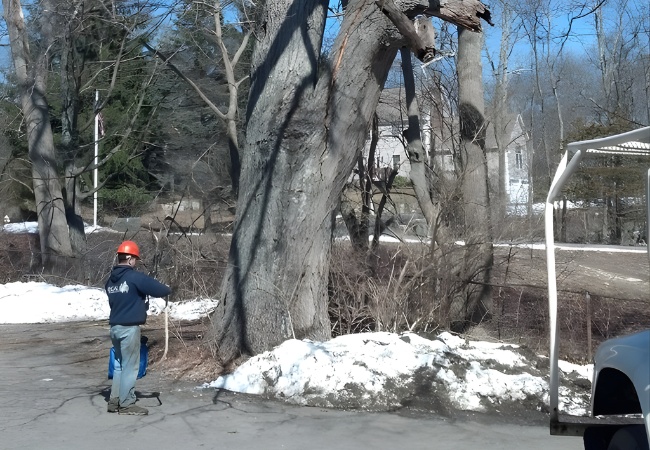
Trees with extensive trunk damage like this typically require removal rather than recovery treatment.
Get a Professional Tree Assessment This Winter from Regal Tree & Shrub Experts
Winter is the best time to get clear answers about storm-damaged or declining trees. A professional assessment helps determine whether recovery is still possible, which trees need corrective care, and which ones are better removed before they become a problem – saving time, money, and guesswork later.
If you’re worried about your trees after a storm, the experts at Regal Tree are ready to help. Our arborists understand the local trees and know how to effectively help them recover from winter damage. Call us today at 774-719-2450 or request a quote online.