That century-old oak dominating your Wellesley front yard represents decades of growth and thousands of dollars in property value. But without proper structural management, mature trees like these develop hidden weaknesses that eventually lead to expensive failure. Winter tree pruning helps address those issues early by allowing arborists to clearly see a tree’s structure and make thoughtful corrections before problems escalate.
For Massachusetts homeowners caring for mature landscapes, winter provides the ideal window for this kind of preservation work. Trees are dormant, which reduces stress from pruning, and the absence of leaves makes it easier to identify poor branch attachments, imbalances, and structural concerns. Addressing these issues now helps preserve valuable trees and lowers the risk of emergency removals later.
Key Takeaways
- Winter’s bare branches expose structural flaws in mature trees that remain hidden during growing seasons, enabling precise architectural corrections.
- Strategic dormant-season cuts redirect energy toward stronger branch development while minimizing stress on established trees.
- Small structural corrections made now prevent expensive emergency removals and preserve valuable tree benefits for decades.
- Professional winter pruning protects mature trees that provide substantial property value, energy savings, and environmental benefits.
- Mature tree structural work scheduled during winter offers better availability and often reduced pricing from arborists.
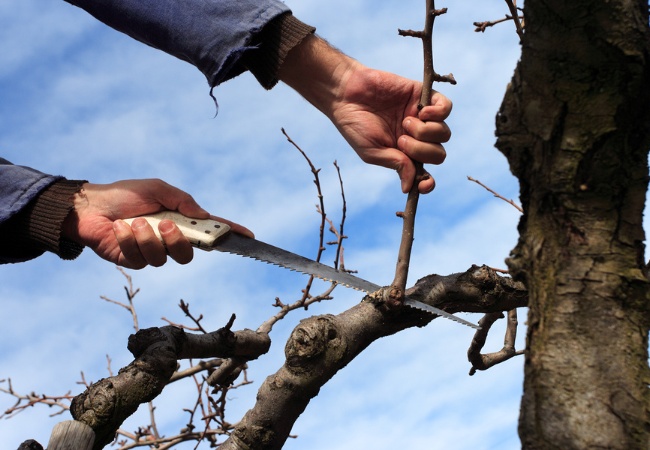
Hand pruning tools allow for precise cuts that promote proper healing and maintain tree health during dormant season care.
Why Is Winter the Best Time for Structural Pruning on Mature Trees?
Winter provides optimal conditions for precise structural work on established trees because bare branches reveal architectural problems that remain hidden during growing seasons.
Structural Problems Are Easier to Identify in Winter
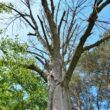
In established trees 20+ years old, structural problems tend to develop slowly and stay hidden beneath dense foliage. Once leaves drop, issues like competing leaders, narrow branch angles, and bark inclusions become much easier to spot. These are the kinds of weaknesses that can compromise a tree’s stability over time.
In mature trees, small structural flaws carry bigger consequences because of the tree’s size and weight. A large oak with competing leaders or poor branch attachments holds thousands of pounds of wood overhead. Winter visibility allows arborists to identify and correct these issues early, while the tree can still be preserved.
Clear Visibility Leads to Better Structural Decisions
Winter tree assessments allow arborists to evaluate the entire framework of a mature tree – from trunk to crown – without leaves obscuring critical details. This makes it easier to identify overextended limbs, crossing branches that weaken each other over time, and imbalances that place unnecessary stress on the tree.
For homeowners in Norfolk County communities like Medfield and Needham, this precision translates to structural improvements that preserve valuable mature trees rather than condemning them to removal.
“When we work on mature trees, the goal isn’t to change how they look – it’s to reduce structural stress and correct problems that develop as trees age. Winter allows us to better assess those issues and make adjustments that help the tree remain stable and manageable over time, rather than reacting after a failure. ” – Kevin Johnston, ISA Certified Arborist and Owner of Regal Tree & Shrub Experts
How Does Winter Pruning Improve Tree Structure?
Strategic structural corrections during dormancy create stronger, more resilient mature trees capable of withstanding decades of New England weather by addressing specific architectural weaknesses.
Weak Branch Angles Get Corrected Before They Fail
Mature trees often develop branches with narrow attachment angles that create structural weakness. These branches with acute angles (less than 45 degrees) lack the strong wood formation needed to support their own weight during ice storms or high winds. As these poorly angled branches grow larger, they become increasingly likely to split away from the trunk.
Winter pruning allows arborists to identify and selectively remove branches with problematic angles while they’re still manageable in size. For mature trees, this means addressing 2-4 inch diameter branches before they become major structural liabilities that could damage the entire tree when they fail.
PRO TIP: If we cannot prune the branches because they have gotten too large, we will suggest structural support systems. Cabling and bracing can help support weak sections of your tree and reduce the risk of failure during a storm.
Overextended Branches Are Reduced Safely and Intentionally
As trees mature, some branches grow farther and heavier than the structure supporting them was designed to handle. These long, horizontal limbs create excess leverage, especially when ice or snow adds weight.
Winter pruning allows arborists to shorten overextended branches in a controlled way, reducing weight while preserving the branch’s natural shape and function. Cuts are made back to strong lateral branches that can take over growth, rather than leaving stubs or thinning indiscriminately.
Following established industry standards for mature tree pruning, this approach lowers failure risk without compromising the tree’s appearance or long-term health.
Crossing Branches Are Removed to Prevent Long-Term Damage
Branches that grow across each other create constant rubbing that weakens both limbs over time. This friction gradually wears away bark and creates entry points for decay organisms that can compromise the tree’s structural integrity. In mature trees, these crossing branches often develop when lower limbs grow toward available light, creating complex architectural problems.
Winter removal of the weaker crossing branch eliminates this progressive damage while preserving the tree’s strongest architectural elements. The goal is to maintain the tree’s natural form while removing structural conflicts that would otherwise lead to long-term decline.
Dead Wood Is Removed Before It Causes Bigger Problems
Dead branches in your tree’s canopy aren’t just ugly – they create real risks. Mature trees have extensive branches throughout, and a large, dead branch breaking and falling through the canopy can damage or destroy numerous healthy branches. These dead branches may also fly off during a storm and damage nearby structures.
Removing dead wood during winter reduces the chance of secondary damage and prevents those weakened limbs from becoming unpredictable hazards. It’s one of the simplest ways to improve both tree health and property safety.
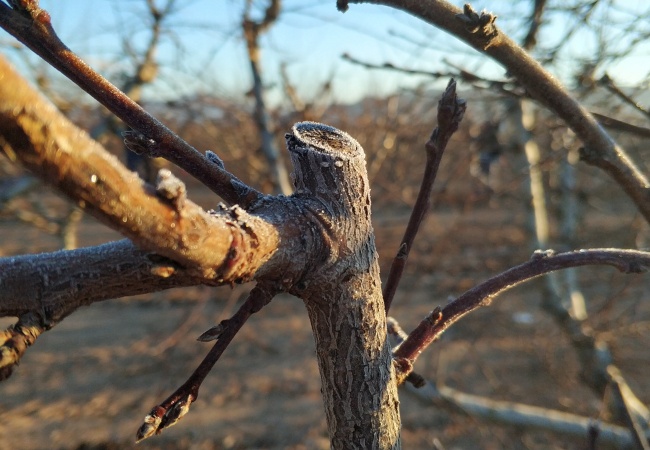
Proper pruning cuts made during winter dormancy heal faster and reduce stress on trees compared to growing season cuts.
How Winter Pruning Supports Long-Term Tree Health
Winter pruning timing aligns with mature tree biology to maximize healing efficiency while minimizing stress on established root systems and branch architecture.
Mature Trees Handle Pruning Better During Dormancy
Unlike younger trees, mature trees rely on large, established root systems to store energy through the winter. Pruning during dormancy allows trees to respond to cuts without competing demands from leaf production or active growth.
When pruning is done in winter, that stored energy supports recovery and reinforces remaining branches instead of being spread thin across unnecessary or weak growth.
Winter Pruning Reduces Stress on Large Canopies
Large, established trees experience significantly more stress from growing season pruning than younger trees. Winter timing eliminates competition between wound healing and active growth processes, allowing mature trees to allocate all available resources toward recovery.
This stress reduction proves particularly important for trees already managing environmental challenges like drought stress, soil compaction, or previous storm damage common in established Massachusetts neighborhoods.
Strategic Care Extends Lifespan for Generations
Well-managed mature trees can thrive for centuries with proper structural care. Winter pruning removes stress points that would otherwise lead to premature decline, allowing healthy trees to continue growing and providing benefits for future generations.
For homeowners managing mature landscapes, this long-term perspective transforms tree care from an expense into an investment in lasting property value, energy efficiency, and environmental stewardship.
PRO TIP: If your mature trees are struggling, pruning may not be enough. Talk to a professional arborist about tree health management programs to keep your tree thriving for another generation.
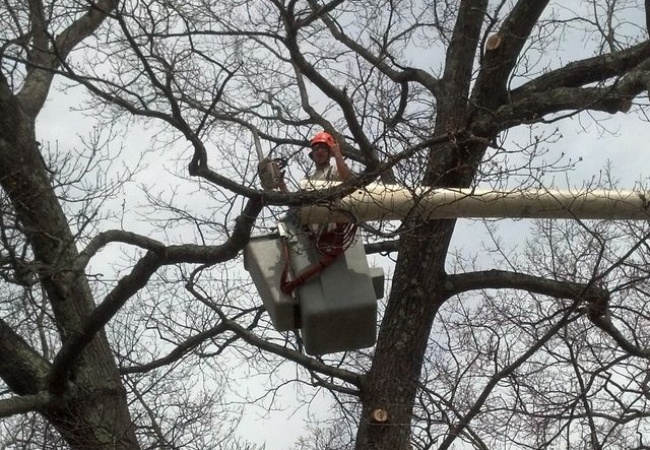
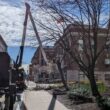
Professional arborists use specialized equipment like bucket trucks to safely access tall branches during winter pruning operations.
Frequently Asked Questions About Mature Tree Pruning During Winter
What makes winter tree pruning for structure different from regular tree trimming?
Winter pruning focuses on long-term structural improvements for mature trees, addressing weak branch angles, overextended branches, and structural attachments that compromise stability. Regular trimming typically addresses appearance and minor growth management.
How do I know if my mature trees need structural pruning?
Signs your mature tree needs structural pruning include:
- Branches with narrow attachment angles
- Limbs extending beyond natural proportions
- Crossing branches that rub together
- Dead wood throughout the canopy
- Previous storm damage
Professional assessment during winter provides the clearest evaluation of structural needs.
Is winter structural pruning worth the investment for older trees?
Strategic structural improvements can extend mature tree life by decades while preventing the loss of valuable energy savings, property value, and environmental benefits that mature trees provide. The economics strongly favor preservation over replacement.
Get Expert Tree Pruning and Structural Care This Winter from Regal Tree & Shrub Experts
Winter offers an ideal opportunity to address structural concerns in mature trees while minimizing stress and preserving long-term stability. Adding a winter assessment and strategic pruning to your winter tree care checklist helps protect irreplaceable landscape investments and the decades of growth they represent.
Protect your mature trees with expert structural evaluation and professional pruning and trimming services from Regal Tree. Our ISA Certified Arborists specialize in preserving valuable mature trees through strategic winter structural improvements. Call 774-719-2450 or request a quote online today!